What is FME?
The only all-data, any-AI platform
TRAINING
Hands-on, practical training for individuals and teams
INTEGRATION
Remove silos, connect all your data and make it usable

CUSTOMER SUCCESS STORY
By migrating Didymo sampling data to ArcGIS Online and automating workflows with FME Server webhook automation, Biosecurity New Zealand transformed an outsourced, manually intensive process into an efficient, transparent, in-house data management system..





– Hellen Simpson, Geospatial Manager, Ministry for Primary Industries

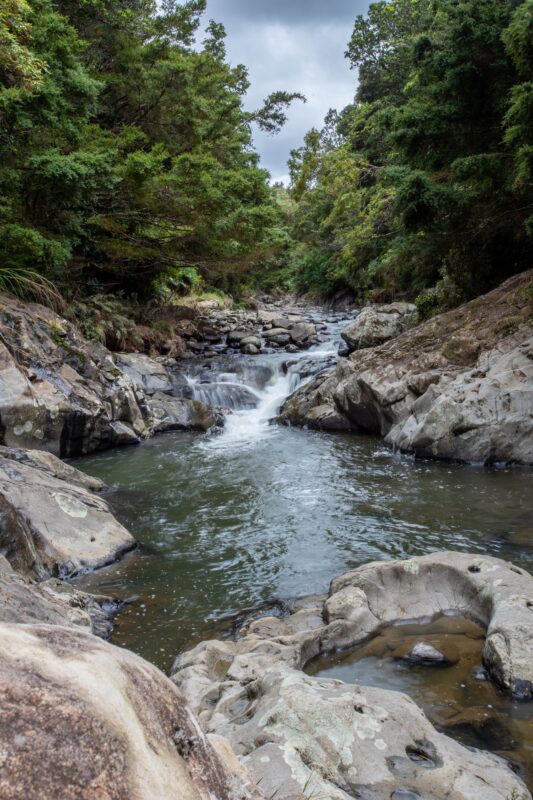
Didymo, an invasive freshwater pest also known as ‘rock snot,’ has been causing damage to lakes and rivers in the South Island of New Zealand since 2004. Biosecurity New Zealand, the biosecurity arm of the Ministry for Primary Industries (MPI), had been responsible for managing the sampling data related to Didymo through the Institute of Environmental Science and Research (ESR). The data, including site status, lab results, and visual results, was stored in a SQL database and made available to the public through a website.
While outsourcing development and maintenance of the database provided benefits at the time, Biosecurity New Zealand more recently identified that developing a new in-house solution would create efficiencies and synergies with other programmes.
To facilitate the in-house management of Didymo sampling data, the initial step involved migrating the data. A backup of the SQL Server was provided and subsequently restored on the UAT SQL server. Given the data’s presence in multiple tables, MPI’s Data and Information team employed FME to cleanse and transform it into a geodatabase format.
What followed was the hosting of data in ArcGIS Online, where sampling site points and related visits information were stored, maintaining a 1-to-many relationship. New sites and visits could now be created using ArcGIS Experience/Survey123, a browser-based platform. Views were implemented on the master layer to restrict access to specific user groups, and dashboards were developed for visualising the data. FME Server webhook automation was employed to streamline certain processes, such as updating site status values based on new visit submissions.
The integration of Survey123 with custom URL hyperlinks supported the pre-population of survey questions with relevant data, and FME’s usability made it easier for colleagues to understand and update site status values based on complicated criteria.
The FME-powered data migration process ensured efficient data wrangling and conversion to a geodatabase, facilitating best practice data management and analysis. The utilisation of ArcGIS Online as the new solution allowed for improved data visualisation through dashboards and a superior user experience.
By implementing FME Server webhook automation, the processing time for updating site status values when new visits were submitted was drastically reduced from 1 minute to an impressive 16 seconds. Additionally, the Didymo Samples Hub Public Dashboard (still in UAT) provides a publicly accessible view of the sampling data, ensuring transparency and increasing awareness about the impact of Didymo on water quality and biodiversity.
Effective biosecurity depends on timely, accurate, and accessible data and that’s especially true when managing an invasive species with the potential to permanently alter New Zealand’s freshwater ecosystems. When critical monitoring data is held in outsourced, siloed systems, the ability to act on it quickly is constrained.
By utilising FME to migrate, cleanse, and automate Didymo sampling data within an ArcGIS Online environment, MPI has demonstrated how government agencies can take meaningful control of their environmental data, improving internal efficiency, enabling better-informed decisions, and making that information publicly available to build wider awareness and trust.
Powered by Locus Expertise
Biosecurity New Zealand tackled Didymo’s impact by migrating sampling data to ArcGIS Online using FME. This improved data management, analysis, and transparency. Survey123 streamlined new site creation, while FME Server automation sped up status updates. The project showcased Didymo’s impact through accessible dashboards, enhancing awareness of water quality and biodiversity effects.