What is FME?
The only all-data, any-AI platform
TRAINING
Hands-on, practical training for individuals and teams
INTEGRATION
Remove silos, connect all your data and make it usable

CUSTOMER SUCCESS STORY
By engaging Locus to build an FME-powered automated workflow, Powerco eliminated the manual, error-prone process of updating multiple systems every time a new customer connection was created, freeing their technical team from data entry and ensuring accurate, validated records are available across both Gas and Electricity networks the moment a new connection goes live..





– Dianne Ford Campbell, GIS Team Leader, Powerco

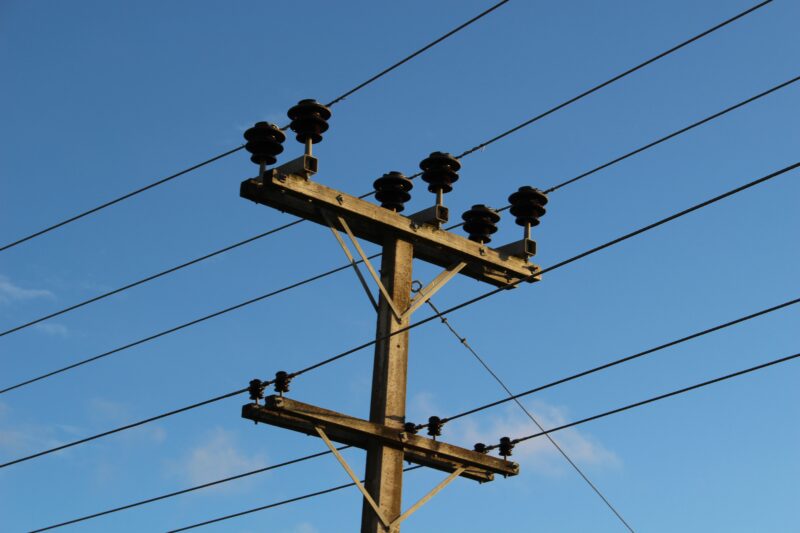
Powerco distributes electricity and gas to 452,000 households, both urban and rural, as well as businesses, major industrial and commercial sites across New Zealand’s North Island. Electricity networks span the Taranaki, Wanganui, Rangitikei, Manawatu, and Wairarapa regions, including the urban centres of New Plymouth, Wanganui, Palmerston North, and Masterton, as well as Tauranga and surrounding rural areas and the eastern and southern Waikato, Thames, and Coromandel regions. Gas networks cover the Taranaki, Manawatu, Hutt Valley, Porirua, Wellington City, Horowhenua, and Hawke’s Bay regions.
As the second-largest gas and largest electricity distributor in New Zealand, Powerco is one of only two dual-energy distributors in the country. Due to the nature of its dual-energy distribution role and the geographical spread of urban and rural customers, the challenge of keeping customer data up-to-date is critical to Powerco operations.
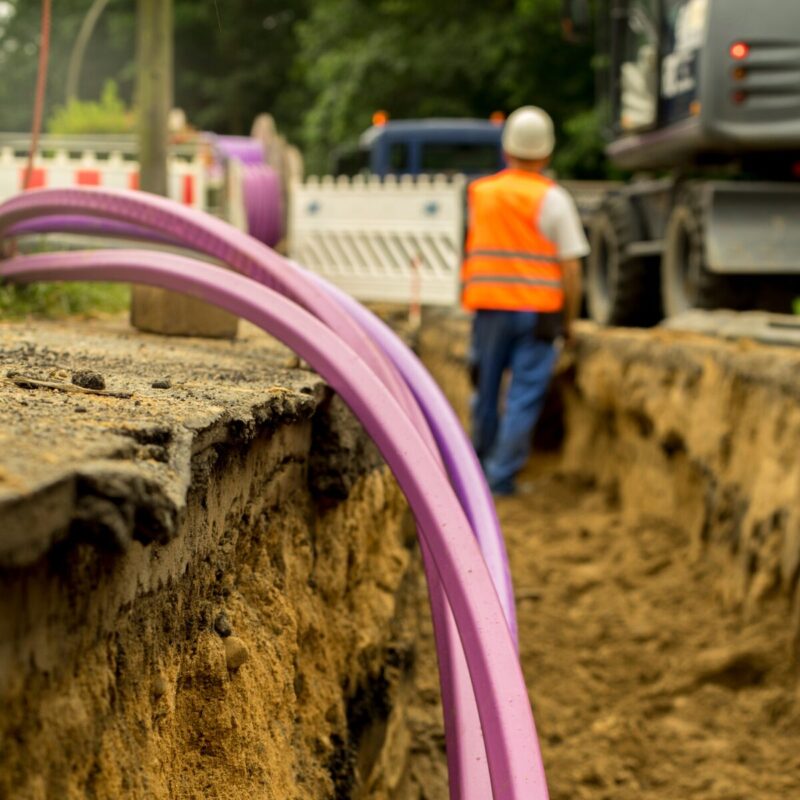
As new customer connections are created for both Gas and Electricity, each new connection requires a series of datasets to be updated within multiple systems, a time-consuming task for Powerco staff, and one that requires precision to ensure no dataset is overlooked.
Powerco engaged Locus to create an automated workflow which updates the appropriate datasets in multiple systems whenever a new customer connection is created. These were completed in two separate stages, beginning with Gas in late 2020, before completing the Electricity process in February 2021.
The workflow is triggered whenever a new customer record is created, invoking an FME workspace to be run on FME Flow. The workspace performs a series of validation checks, ensuring that the source data meets the prescribed specifications, maps values to coded domains, and its spatial location can be plotted correctly. Any validation issues are automatically detected and reported via email so that the team can fix them at source and ensure the data can be created accurately. Once validated, the records are inserted into the appropriate tables, with parent/child relationships created automatically.
Given the high volume of customer connections that Powerco needs to create, it is very hard to quantify the benefit of implementing an automatic process like this. However, by building an automated system Powerco has been able to release its talented technical team from task-based manual processing, allowing them to spend significantly more time on value-add work, rather than data entry.
Data validation on creation ensures that poor quality data cannot be entered into the system. The timeliness of records being created instantly also guarantees that where initial data issues exist, users are prompted immediately, meaning problems can be remedied before they compound. Accurate and timely data is created and available in multiple systems to enable business users to make informed decisions about Powerco Electricity and Gas Networks. The most significant improvement to date is the ability to rely on now up-to-date data during storm scenarios.
For energy distributors managing dual-network infrastructure across large and geographically dispersed service areas, data accuracy isn’t just an operational nicety,it’s a safety and resilience requirement. When customer connection records are created manually across multiple systems, the risk of gaps, errors, and delays is ever-present.
By utilising FME to automate the creation, validation, and distribution of customer connection data across both Gas and Electricity networks, energy distributors can eliminate that risk entirely, ensuring their teams always have accurate, spatially verified records available at the moment they’re needed, whether for day-to-day operations or critical storm response.
Powered by Locus Expertise